Shyam's Slide Share Presentations

VIRTUAL LIBRARY "KNOWLEDGE - KORRIDOR"

This article/post is from a third party website. The views expressed are that of the author. We at Capacity Building & Development may not necessarily subscribe to it completely. The relevance & applicability of the content is limited to certain geographic zones.It is not universal.

TO VIEW MORE CONTENT ON THIS SUBJECT AND OTHER TOPICS, Please visit KNOWLEDGE-KORRIDOR our Virtual Library

Showing posts with label Space Technology. Show all posts

Friday, July 1, 2016

Juno Space craft from Inside 07-02


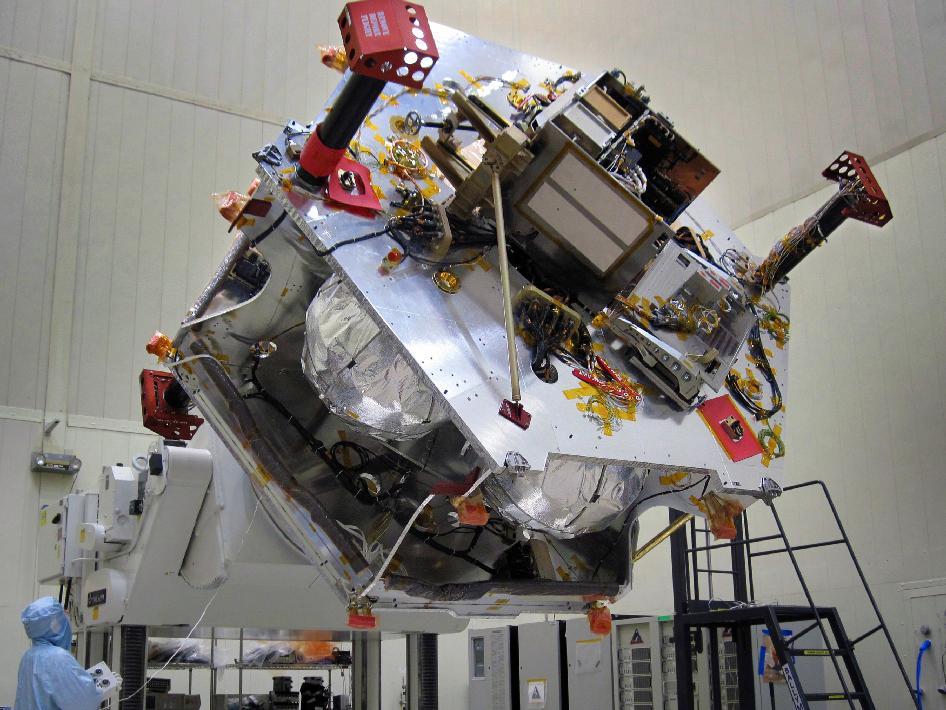
Juno: Inside the Spacecraft
image

Our Juno spacecraft was carefully designed to meet the tough challenges in flying a mission to Jupiter: weak sunlight, extreme temperatures and deadly radiation. Lets take a closer look at Juno:

It Rotates!
image
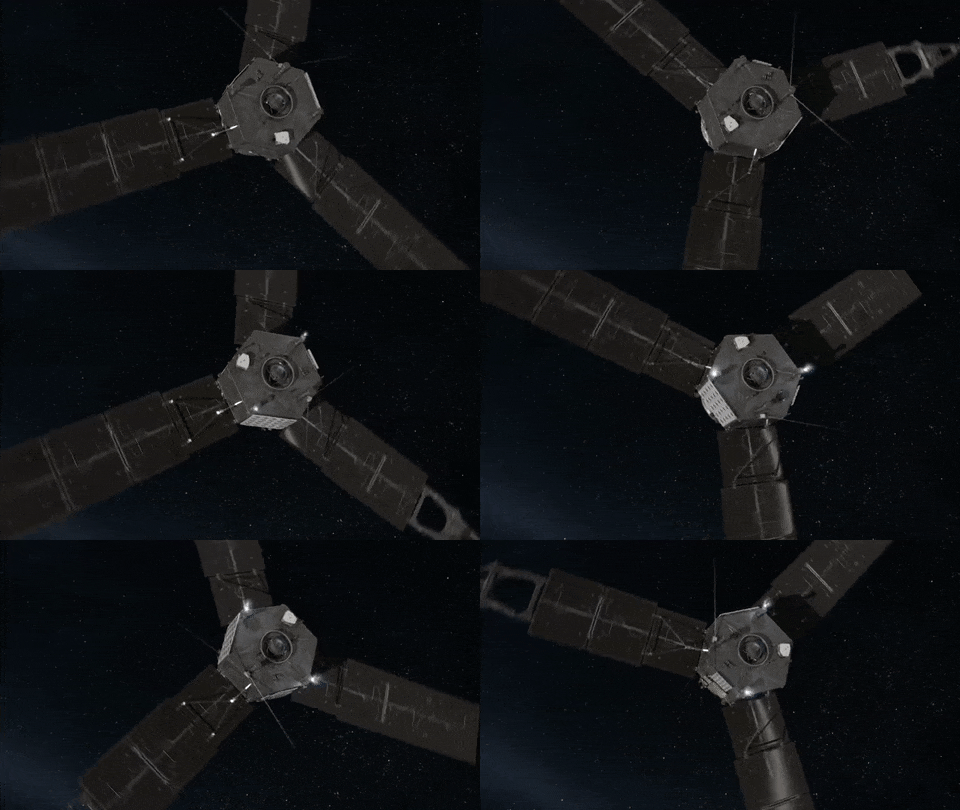
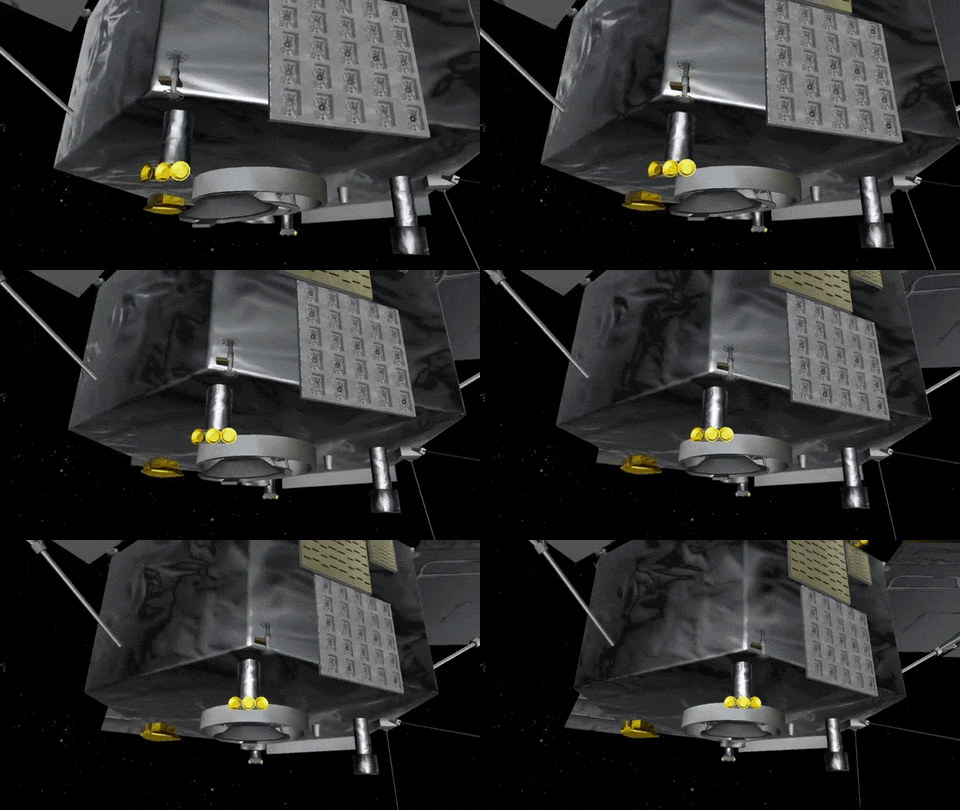
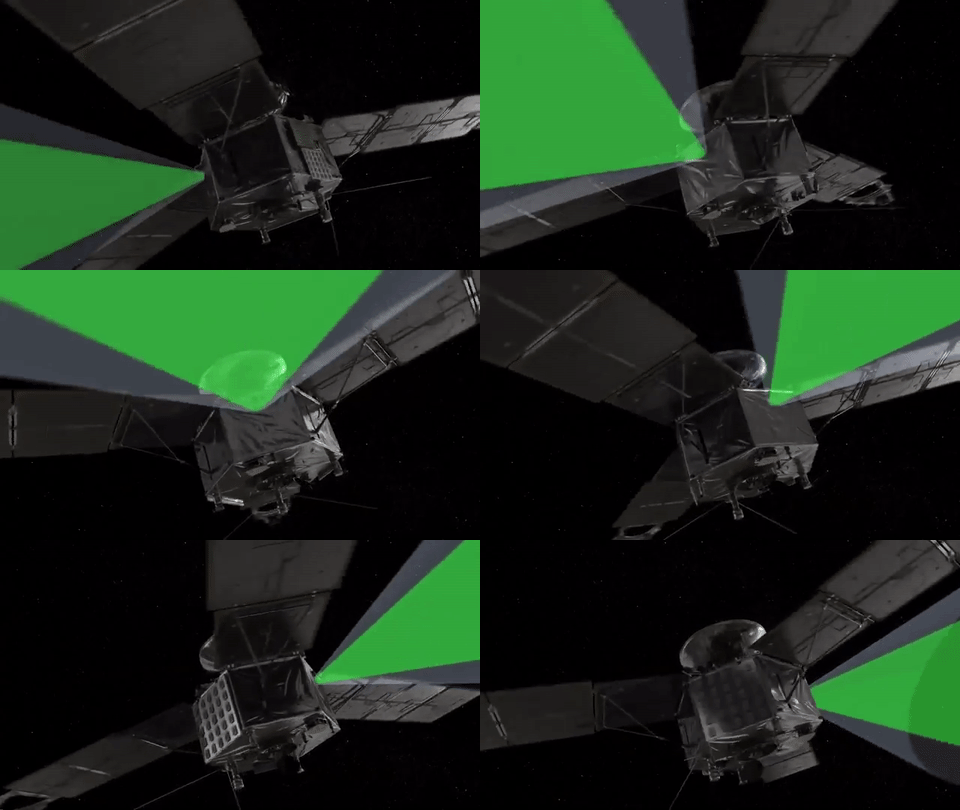
Roughly the size of an NBA basketball court, Juno is a spinning spacecraft. Cartwheeling through space makes the spacecraft’s pointing extremely stable and easy to control. While in orbit at Jupiter, the spinning spacecraft sweeps the fields of view of its instruments through space once for each rotation. At three rotations per minute, the instruments’ fields of view sweep across Jupiter about 400 times in the two hours it takes to fly from pole to pole.
It Uses the Power of the Sun
image
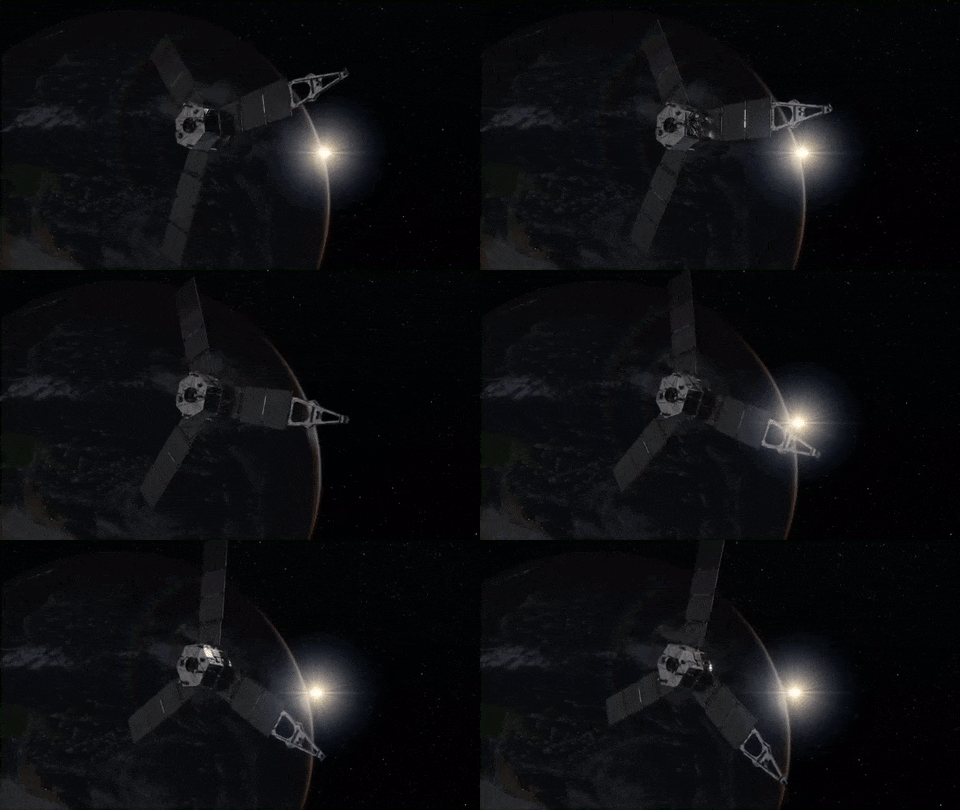
Jupiter’s orbit is five times farther from the sun than Earth’s, so the giant planet receives 25 times less sunlight than Earth. Juno will be the first solar-powered spacecraft we’ve designed to operate at such a great distance from the sun. Because of this, the surface area of the solar panels required to generate adequate power is quite large.
image
Three solar panels extend outward from Juno’s hexagonal body, giving the overall spacecraft a span of about 66 feet. Juno benefits from advances in solar cell design with modern cells that are 50% more efficient and radiation tolerant than silicon cells available for space missions 20 years ago. Luckily, the mission’s power needs are modest, with science instruments requiring full power for only about six out of each 11-day orbit.
It Has a Protective Radiation Vault

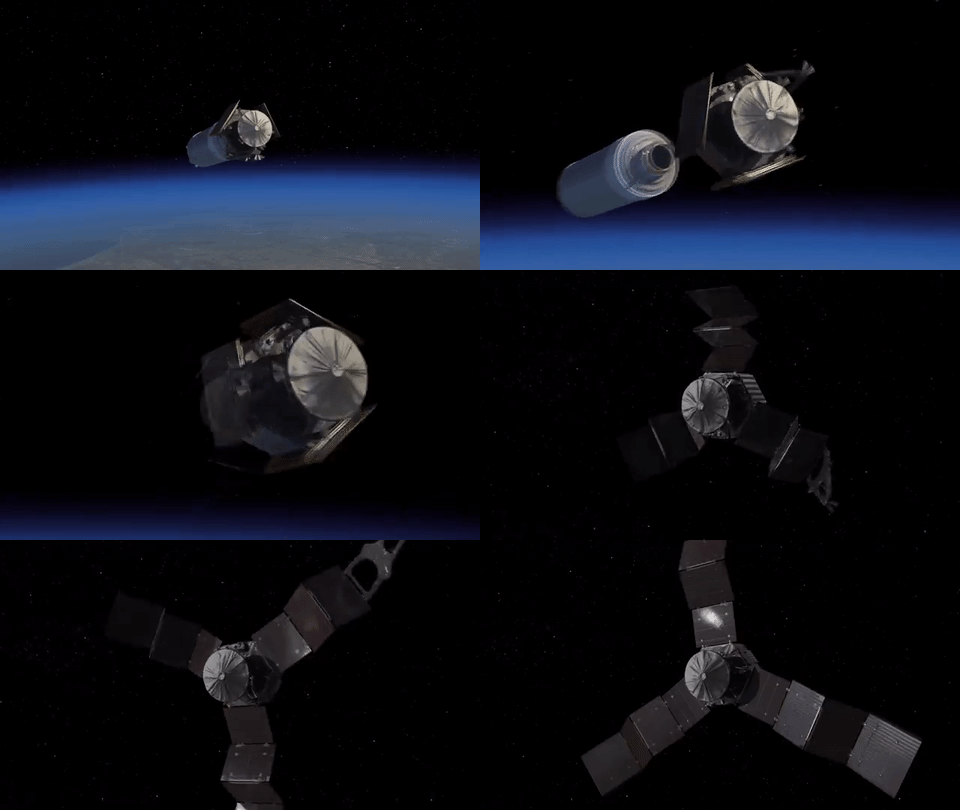
Juno will avoid Jupiter’s highest radiation regions by approaching over the north, dropping to an altitude below the planet’s radiation belts, and then exiting over the south. To protect sensitive spacecraft electronics, Juno will carry the first radiation shielded electronics vault, a critical feature for enabling sustained exploration in such a heavy radiation environment.

Juno Science Payload:

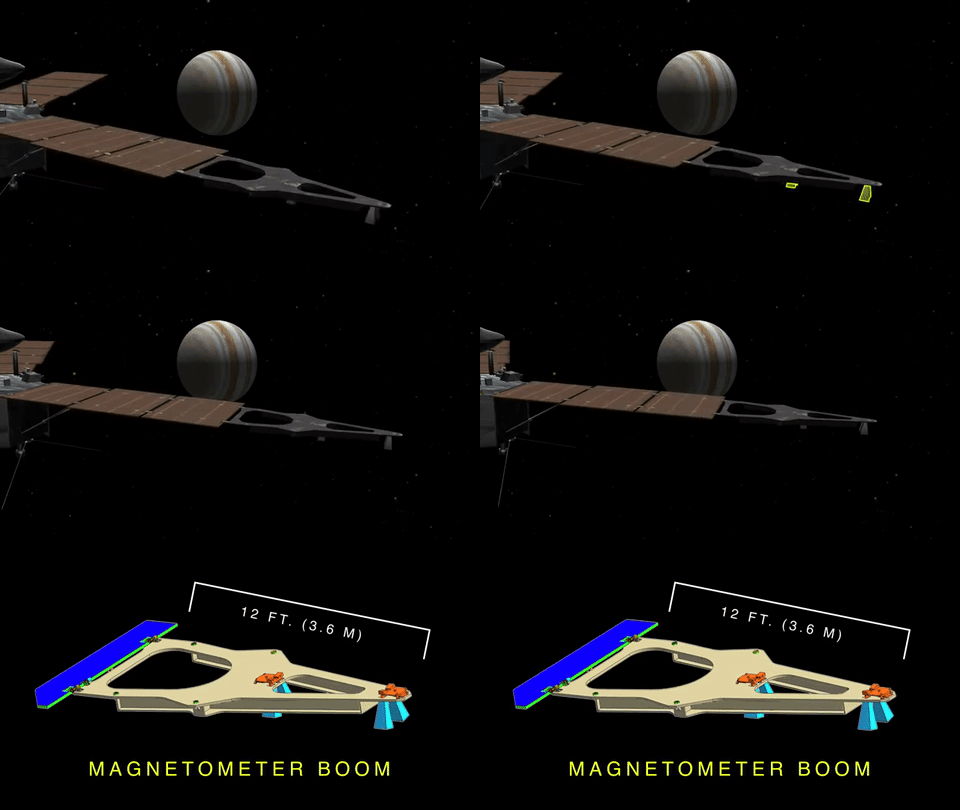
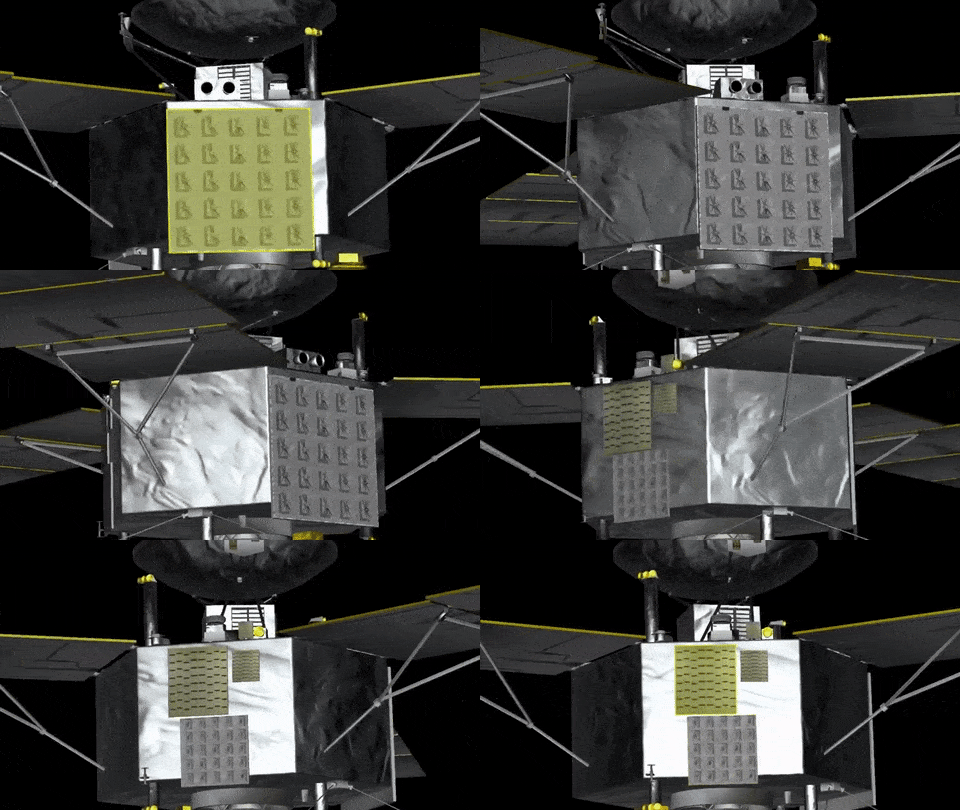
Gravity Science and Magnetometers – Will study Jupiter’s deep structure by mapping the planet’s gravity field and magnetic field.
image
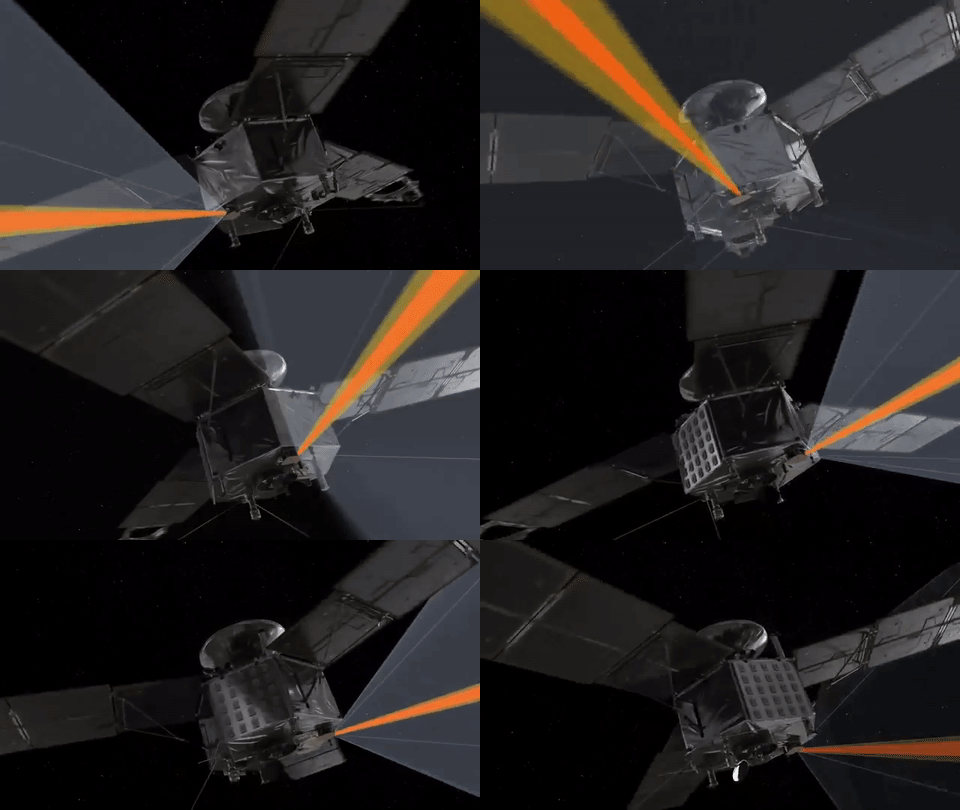
Microwave Radiometer – Will probe Jupiter’s deep atmosphere and measure how much water (and hence oxygen) is there.
image
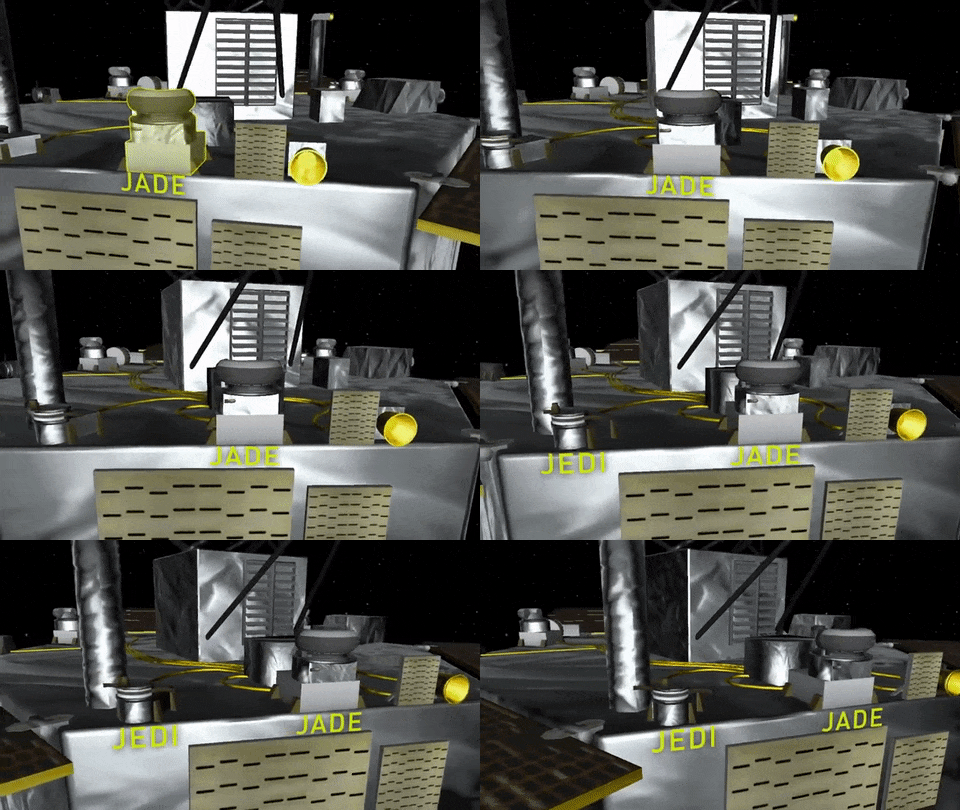
JEDI, JADE and Waves – These instruments will work to sample electric fields, plasma waves and particles around Jupiter to determine how the magnetic field is connected to the atmosphere, and especially the auroras (northern and southern lights).
JADE and JEDI
image
Waves
image
UVS and JIRAM – Using ultraviolet and infrared cameras, these instruments will take images of the atmosphere and auroras, including chemical fingerprints of the gases present.
UVS
image
JIRAM
image
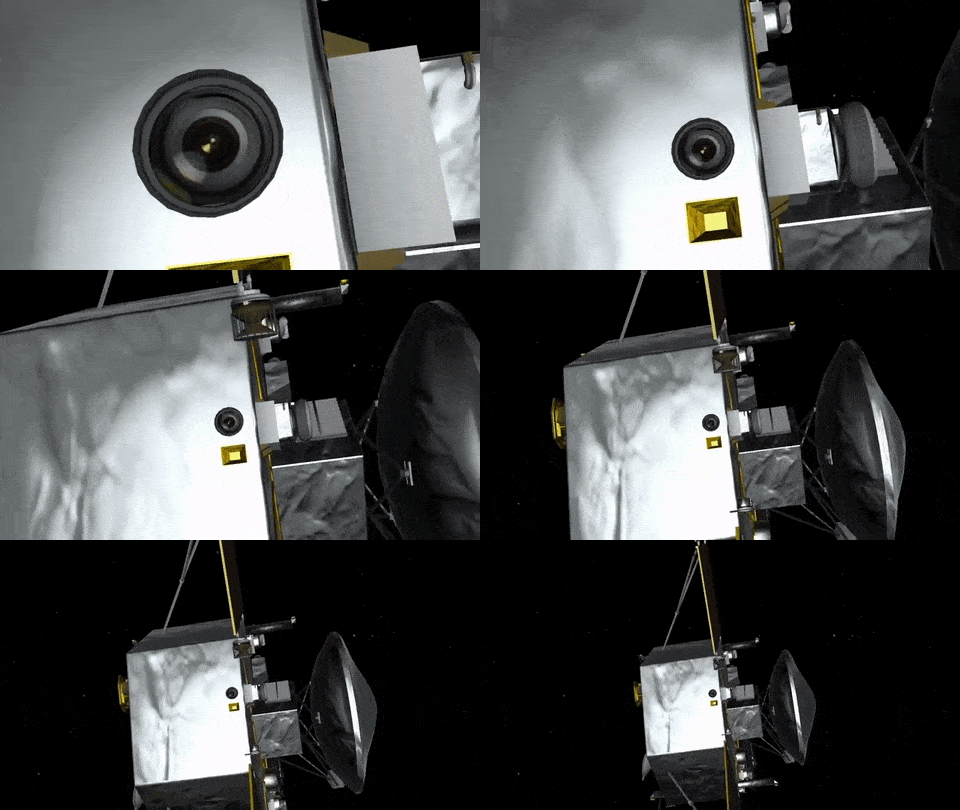
JunoCam – Take spectacular close-up, color images.
image


Solar System: Things to Know This Week


image


For the first time in almost a decade, we’re going back to Jupiter. Our Juno spacecraft arrives at the king of planets on the fourth of July. From a unique polar orbit, Juno will repeatedly dive between the planet and its intense belts of charged particle radiation. Juno’s primary goal is to improve our understanding of Jupiter’s formation and evolution, which will help us understand the history of our own solar system and provide new insight into how other planetary systems form.
In anticipation, here are a few things you need to know about the Juno mission and the mysterious world it will explore:

1. This is the Big One
image
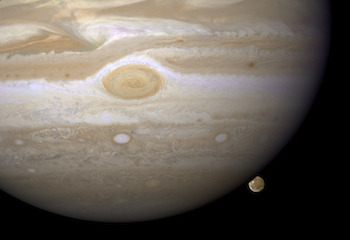
The most massive planet in our solar system, with dozens of moons and an enormous magnetic field, Jupiter rules over a kind of miniature solar system.

2. Origin Story


Why study Jupiter in the first place? How does the planet fit into the solar system as a whole? What is it hiding? How will Juno unlock its secrets? A series of brief videos tells the stories of Jupiter and Juno. Watch them HERE.
3. Eyes on Juno
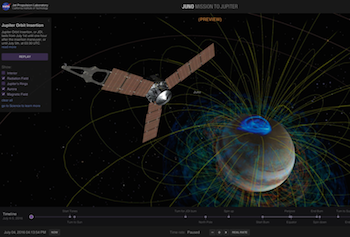
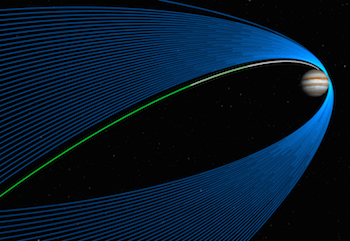
If you really want a hands-on understanding of Juno’s flight through the Jupiter system, there’s no better tool than the “Eyes on Juno” online simulation. It uses data from the mission to let you realistically see and interact with the spacecraft and its trajectory—in 3D and across both time and space.
4. You’re on JunoCam!
image
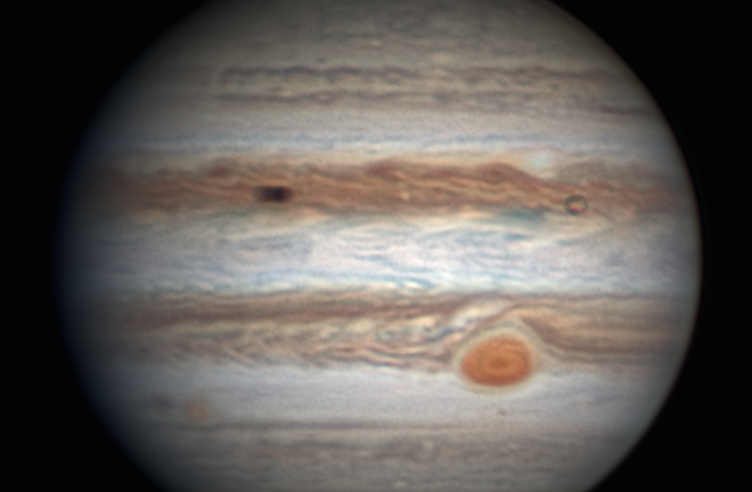
Did you know that you don’t have to work for NASA to contribute to the Juno mission? Amateur astronomers and space enthusiasts everywhere are invited to help with JunoCam, the mission’s color camera. You can upload your own images of Jupiter, comment on others’ images, and vote on which pictures JunoCam will take when it reaches the Jovian system.
5. Ride Along
image
It’s easy to follow events from the Juno mission as they unfold. Here are several ways to follow along online:


Friday, August 21, 2015

Space elevator with inflatable tower patented by Thoth Technology 08-20

Space elevator with inflatable tower patented by Thoth Technology


Space cargo would travel up tower and launch from high altitude or low-Earth orbit


The top of a space elevator platform recently patented by Thoth Technology of Pembroke, Ont. is shown in this artist's concept. The company thinks a 20-kilometre-high version could be built within 10 years. (Toth Technology/Canadian Press)

Pembroke, Ont.-based Thoth Technology has patented an inflatable tower that could carry a "space elevator" higher than passenger jets fly – and eventually into low-Earth orbit.

The patent, which has been granted in the U.K. and the U.S. so far, describes a tower with a space launch platform on top that would initially be built to a height of around 20 kilometres high, but could theoretically be built to more than 200 kilometres high, and reach into low Earth orbit.

It would be made of stacked rings of Kevlar cells inflated with hydrogen or helium to an extremely high pressure. An elevator could ride up the tower, carrying spacecraft, satellites and other goods to be launched into space – along with tourists looking for an extraordinary view.

Carrying space cargo partway with an electric elevator would drastically reduce the amount of fuel needed to send such loads into space, says Brendan (Ben) Quine, the inventor behind the patent and Thoth Technology's chief technical officer.


Right now, rockets carry extra fuel in containers called "stages" that drop off and fall into the ocean as the rocket gains altitude.

Brendan Quine


Ben Quine, inventor of the space elevator tower, is chief technology officer at Thoth Technology and an associate professor of space engineering at York University in Toronto. (Thoth Technology)

Launching from a 20-kilometre-high tower would cut the amount of fuel needed by a third and make the first stage of the rocket unnecessary, Quine said, making fully reusable spacecraft, including rockets and space planes, more practical.

Caroline Roberts, president and CEO of the company, which is also working on getting a Canadian patent, says the tower could work well with the reusable rocket technology that SpaceX is developing.

She also believe the 20-kilometre-high tower would be an attractive tourist destination.

"From the top of the tower looking out, you would be able to see the bright blue rim of the Earth and a view stretching 1,000 kilometres."

The tower could also support massive wind turbines for power generation and be an alternative to satellites as a place to attach communications equipment.

Quine has already built a seven-metre-high scale model, which he unveiled in 2009 at York University in Toronto, where he is an associate professor.

Roberts says the company hopes to build a 1.5-kilometre-high prototype within five years – a height that would make it significantly higher than the current world's tallest building, the830-metre-tall Burj Khalifa in Dubai.

Roberts thinks a version that could reach 20 kilometres above sea level, starting from the top of a five-kilometre-high mountain, could be built with 10 years at a cost of about $5 billion US.


Burj Khalifa


Quine's invention isn't a traditional space elevator, an idea that has been kicking around since the late 19th century. The traditional concept consists of a fine cable with one end attached to weight in space, orbiting the Earth, and the other end tethered to the ground. The cable would be used as a track for attaching "climbers" carrying goods from one end to the other.

There are two challenges with that concept, Quine said:

    It needs to be built in space.


The cable would be degraded by meteor and lightning strikes, and would have to be replaced every six months.


Thoth Technology's elevator tower could be built from the ground up, and easily withstand not just lightning and meteors, but even category five hurricanes, Quine says.
In fact, the design includes gyroscopes to control the tower's movement and actively stabilize it during major storms.

Self-climbing elevator

Quine envisions several possible ways to get the elevator up the tower.
The traditional cable used to raise most elevators wouldn't be possible, since existing elevator cable materials couldn't support 1.5 kilometres worth of their own weight. Scientists have proposed making space elevator cables out of a new, ultra-strong, high-tech material called carbon nanotubes, but "you can't make cables out of carbon nanotubes that are rated for people yet," Quine says.
One possibility is a "self-climbing" elevator attached to claws that reach three-quarters of the way around the tower and wheels underneath the claws to allow the elevator to spiral around the outside.
"My preference would definitely be to have them on outside because then you'd get the view," Quine said. "The safety engineers are going to want it on the inside."
While the company works on the Canadian patent, it is interested in talking to anyone around the world who is interested in licensing its technology and building the prototype, Quine says.
View at the original source

Wednesday, February 18, 2015

How big data from space helps life on earth 02-18

How Big Data from Space helps  Life on Earth


As an oceanographer and former NASA astronaut, I am particularly well placed to appreciate the perspectives space can give us on life on earth. My first glimpse of our blue planet stole my breath and has never let it go.
I have been working to deepen our understanding of and appreciation for this planet since. Key to that understanding are the observational data – much of it from satellites – that feed our knowledge of this planet. Among other things, observations from satellites help us to understand our changing climate, predict hazardous weather and provide early warning of potential crop failures or freshwater shortages.
The big data revolution could lead to currently unimagined uses for the data we receive from satellites. Entrepreneurs could come up with new applications and ideas for mashing up data. But the data itself should, I believe, be regarded as a public good. How to guarantee this, in a world where public budgets are squeezed and space exploration is becoming increasingly affordable for private players, is a question that deserves serious thought and active engagement.
From fish in Peru to drought in Australia
It is worth reflecting on the sobering fact that we are the first generation of humans that could even have this conversation. Just over four decades ago, nobody would even have thought to connect variations in the catch of Peruvian fisheries, say, with unseasonably dry spells in central Australia. It was only with the availability of snapshots from satellites in the 1970s that we could identify and begin to understand the phenomenon that linked them: El Nino.
Since then our uses of data from space have become increasingly sophisticated. It is bordering on miraculous, for example, that we can have a reasonable degree of confidence in long-range weather forecasts. Weather patterns are so complex, chaos ought to overwhelm predictability once we look just a day or two ahead. But by analyzing patterns from thousands of different kinds of daily observations over the years, we have become better able to tease out the likeliest patterns.
No single satellite can make all the observations necessary to compile a reliable weather forecast. Indeed, no single country’s satellites can do so. There has developed, therefore, a convention of data sharing among government-run space programmes to enable each country’s meteorological offices to access all the information they need to predict the weather.
Data as a public good
This is what I mean by regarding data as a public good. The ability to forecast hurricanes, typhoons, droughts and heatwaves is clearly of benefit to humanity as a whole, and the data on which it relies is deservedly regarded as part of the global commons.
I believe we should take the same approach to all kinds of “environmental intelligence” represented by satellite data, in combination with sensors on the ground, whenever it has implications that transcend national borders – where population’s lives and livelihoods are at stake. By analyzing the reflections of microwaves beamed at forests, for example, we can tell when their ecosystems are under stress; measurements of ocean temperatures help us to predict where fish will be; observations from space can warn about problems with soil conditions that could help the world to prepare for poor harvests.
As technology advances, so does the capacity to generate actionable intelligence. In recent years, for instance, satellites have allowed us to map differences in gravity on the Earth’s surface so precisely that we can calculate how much groundwater is stored in aquifers – something never before possible. Given the potential of freshwater shortages to impact everything from food security to energy supplies and geopolitical tensions, it is clearly beneficial for this knowledge to be in the public domain.
Katchy Sullivan
“The price could be paid in human lives”
The question of how to ensure space-based knowledge is used for the common good has become pressing with the dawning of a new space age, in which satellites have become affordable for private interests. At the same time, public finances in countries which have traditionally funded major space programmes have come under stress. Increasingly, there is pressure on governments to buy in data from private providers rather than fund satellite programmes themselves.
At first glance, this makes sense. But some changes in the private sector’s role in space raise troubling hypotheticals. Imagine that a commodity trader, for example, monopolized data that enabled harvests to be predicted. A killing could be made on the futures markets – but the price could be paid in human lives, if exclusion from that data hindered public agencies from preparing for famine.
As private satellites proliferate and the big data revolution advances, we need to debate public and private roles in space. One model to consider is the Monsanto-owned Climate Corporation. It takes publicly available data and adds value by analyzing it in ways that generate guidance individuals will pay for: when a farmer should irrigate a field, for example.  The underlying public data remain freely available – even viewable on a the free level of the company’s web service – and so continue to serve the general public via advanced warning of severe drought or accurate forecasts of seasonal flooding.
In the coming decades, new technologies and business models will radically expand the data available from satellites and the uses to which it can be put. Our challenge is to ensure that observations about our planet benefit everyone who lives on it.

Monday, January 5, 2015

Cool NASA animation beautifully details every step of Orion's first launch 01-06

Cool NASA animation beautifully details every step of Orion's first launch


Orion atop Delta 4 Heavy Booster. Credit: NASA/Kim Shiflett

It's not Science Fiction! It's Not Star Trek!

No. It's a really, really big NASA Mission! It's Orion!
In fact, it's the biggest and most important development in US Human Spaceflight since the end of the Space Shuttle Program in 2011.
Orion is launching soon on its first flight, the pathfinding Exploration Flight Test-1 (EFT-1) mission and sets NASA on the path to send humans to Mars in the 2030s.
Watch this cool NASA animation beautifully detailing every key step of Orion's First Launch!
Orion is designed to take humans farther than they've ever gone before. Even farther into deep space than NASA's Apollo moon landing which ended more than four decades ago!
We are T-MINUS 4 Days and Counting to the inaugural blastoff of Orion as of today, Sunday, November 30, 2014.
To learn even more about the 8 major events and goals happening during Orion's EFT-1 mission be sure to check out my recent story with NASA's fabulous new set of infographics – here.


Every aspect of the final processing steps now in progress by engineers and technicians from NASA, rocket provider United Launch Alliance, and Orion prime contractor Lockheed Martin is proceeding smoothly and marching towards launch.
Orion will lift off on a United Launch Alliance Delta IV Heavy rocket on its inaugural test flight to space on the uncrewed Exploration Flight Test-1 (EFT-1) mission at 7:05 a.m. EST on December 4, 2014, from Space Launch Complex 37 (SLC-37) at Cape Canaveral Air Force Station in Florida.


Orion’s move to Launch Complex-37. Credit: Mike Killian
The two-orbit, four and a half hour Orion EFT-1 flight around Earth will lift the Orion spacecraft and its attached second stage to an orbital altitude of 3,600 miles, about 15 times higher than the International Space Station (ISS) – and farther than any human spacecraft has journeyed in 40 years.
EFT-1 will test the rocket, second stage, jettison mechanisms as well as avionics, attitude control, computers and electronic systems inside the Orion spacecraft.


Here’s how Orion EFT-1 Launch will look! Delta 4 Heavy rocket and super secret US spy satellite roars off Pad 37 on June 29, 2012, from Cape Canaveral, Florida. NASA’s Orion EFT-1 capsule will blastoff atop a similar Delta 4 Heavy Booster in December 2014. Credit: Ken Kremer
Then the spacecraft will carry out a high speed re-entry through the atmosphere at speeds approaching 20,000 mph and scorching temperatures near 4,000 degrees Fahrenheit to test the heat shield, before splashing down for a parachute assisted landing in the Pacific Ocean.
Orion is NASA's next generation human rated vehicle that will carry America's astronauts beyond Earth on voyages venturing farther into deep space than ever before – beyond the Moon to Asteroids, Mars, and other destinations in our Solar System.

After Orion launch, big steps lie ahead for Mars trip, NASA says 01-06

After Orion launch, big steps lie ahead for Mars trip, NASA says


Valles Marineris, Mars. Credit: NASA

If creating the new Orion space capsule or developing a new deep-space rocket are complex and critical breakthroughs, NASA's remaining challenges to send humans to Mars are no less daunting, officials said Tuesday.

NASA's next-generation capsule, Orion, is ready for its maiden launch Thursday at 7:05 a.m. from Cape Canaveral Air Force Station. Space agency officials call it the first step for a human journey to Mars.
"It is truly a beautiful planet. It has fabulous vistas. It has a number of resources that we are finding out about, and we are planning to move toward human exploration of Mars," Jim Green, NASA's Planetary Science Division director, said during a news briefing held jointly in Washington and Kennedy Space Center.
Yet the Orion, and the Space Launch System rocket being developed for a 2018 launch, are only the first steps. Development of human life support, fuel, communication and Martian landing systems are in much earlier development. Those challenges and budget concerns leave NASA officials saying they hope to reach Mars sometime in the 2030s.
The overriding challenge is that it would take astronauts more than a year to get there, so they'll have to take everything they need or have it waiting for them along the way, said Jason Crusan, director of NASA's Advanced Exploration Systems Division.
"We describe it as ... going from an Earth-reliant to an Earth-independent phase," Crusan said.
Among the challenges:
-The agency thinks it impractical to carry enough liquid or solid fuel. So NASA is exploring high-powered solar-electric engines to propel Orion through space. That could be viable by the end of this decade, said James Reuther, NASA's deputy associate administrator for space-technology mission programs.
-NASA's current communication systems are radio-based and only carry a tiny fraction of the information necessary. The agency is working on laser-based optical-communication technologies. It could be workable by the early 2020s, Reuther said.
-To land on Mars, NASA plans to adapt technologies used to land the Curiosity Martian rover two years ago. Scaling that to handle a far-heavier human craft may not happen until the early 2030s, he said.
-NASA must develop living quarters for the astronauts' long journeys and for stays in orbit around Mars and on that planet. The agency is considering sending up habitats in advance, placing them in orbit near Earth's moon, in orbit around Mars and on Mars' surface. Orion astronauts could use them on the way, Crusan said.

NASA explores inflatable spacecraft technology (Update) 01-05

NASA explores inflatable spacecraft technology (Update)


This May 14, 2012 photo provided by NASA Langley shows the inflatable structure of a Hypersonic Inflatable Aerodynamic Decelerator, background, made up of high-tech fabric rings, similar to those seen in the foreground, at NASA Langley research center in Hampton, Va. When Orbital Sciences resumes sending supplies to the International Space Station, its Antares rocket will carry an experimental inflatable spacecraft technology that engineers at NASA's Langley Research Center have been working on for more than a decade. (AP Photo/ NASA Langley, Kathy Barnstorff)

Devising a way to one day land astronauts on Mars is a complex problem and NASA scientists think something as simple as a child's toy design may help solve the problem. Safely landing a large spacecraft on the Red Planet is just one of many engineering challenges the agency faces as it eyes an ambitious goal of sending humans into deep space later this century.

At NASA's Langley Research Center in Hampton, Virginia, engineers have been working to develop an inflatable heat shield that looks a lot like a super-sized version of a stacking ring of doughnuts that infants play with. The engineers believe a lightweight, inflatable heat shield could be deployed to slow the craft to enter a Martian atmosphere much thinner than Earth's.

Such an inflatable heat shield could help a spacecraft reach the high-altitude southern plains of Mars and other areas that would otherwise be inaccessible under existing technology. The experts note that rockets alone can't be used to land a large craft on Mars as can be done on the atmosphereless moon. Parachutes also won't work for a large spacecraft needed to send humans to Mars, they add.
Hence the inflatable rings. The rings would be filled with nitrogen and covered with a thermal blanket. Once deployed for landing, the rings would sit atop the spacecraft, somewhat resembling a giant mushroom.
"We try to not use propulsion if we don't have to," said Neil Cheatwood, the senior engineer at Langley for advanced entry, descent and landing systems. "We make use of that atmosphere as much as we can, because it means we don't have to carry all that fuel with us."
NASA's leaders acknowledge that getting humans safely to and from Mars as early as the 2030s will poses extreme challenges. The agency's scientists acknowledge they also must design new in-space propulsion systems, advanced spacesuits, long-term living habitats aboard spacecraft—even communication systems for deep space.
Work is proceeding, sometimes fitfully.


In this April 27, 2012 photo provided by NASA, engineers check out the Inflatable Reentry Vehicle Experiment (IRVE-3) following the complete inflation system test under vacuum conditions in the Transonic Dynamics Tunnel at NASA's Langley Research Center in Hampton, Va. When Orbital Sciences resumes sending supplies to the International Space Station, its Antares rocket will carry an experimental inflatable spacecraft technology that engineers at NASA's Langley Research Center have been working on for more than a decade. (AP Photo/NASA Langley, Sean Smith)
When an unmanned private rocket destined for the International Space Station exploded in October soon after liftoff from Wallops Island, Virginia, numerous scientific experiments went up in flames with it. But one NASA experiment that Orbital Sciences Corp. originally invited aboard—for a second-generation inflatable spacecraft—never made it for lack of time to get it together, NASA officials say.
That experiment calls for testing how second-generation inflatable spacecraft technology performs upon re-entry in Earth's atmosphere. The test is important because NASA officials believe an inflatable heat shield could be what helps them land astronauts on Mars and return larger loads of supplies from the International Space Station. The experiment is now scheduled to go up on the next Antares rocket in 2016.
Engineers at Langley have been working on the inflatable technology for about a decade, and believe it is close to being ready for operational use. "If I had the budget and we had the funding to do it, I think we could get as large a scale as needed for humans in five to ten years," Cheatwood said.
He said the same inflatable technology could also be used for spacecraft to explore other planets or objects with atmospheres, such as Venus, Jupiter and Titan, Saturn's largest moon.
Because the inflatables are made of lightweight material and filled with nitrogen, more room is left aboard a spacecraft for science experiments and other things astronauts will need. The inflatable is covered by a thermal blanket of layers of heat-resistant materials.
"The idea is that you would have something that could be packed up, put in a very small volume and then deployed into a very large size," Anthony Calomino, principal investigator for materials and structures for hypersonic re-entry at Langley.
He said in a statement in April: "Think airbag, something we could pack into compressed volume that will fit the size limits of a launch shroud, but allow for a much larger aeroshell."
Smaller scale, inflatable experiments have been launched on rockets before, but never into orbit. That work was recently part of a NASA review in October. The information gathered from those earlier projects will be applied to the upcoming, larger-scale experiment in 2016.
It still won't be large enough to protect a spacecraft carrying astronauts, but NASA scientists believe the technology is sound.
"When you first tell people you're going to do an ... inflatable spacecraft, they have in their minds something really floppy like a jellyfish and it's really not that way," Cheatwood said. "They're very durable ... This is a technology that I think is ready to use, whether it's for humans in 20 years on Mars or whether it's a large robotic mission sooner than that."

Monday, April 7, 2014

NASA Electromagnetic Spectrum 04-07

The Electromagnetic Spectrum

As it was explained in the Introductory Article on the Electromagnetic Spectrum, electromagnetic radiation can be described as a stream of photons, each traveling in a wave-like pattern, carrying energy and moving at the speed of light. In that section, it was pointed out that the only difference betweenradio waves, visible light and gamma rays is the energy of the photons. Radio waves have photons with the lowest energies.Microwaves have a little more energy than radio waves.Infrared has still more, followed by visible, ultraviolet, X-raysand gamma rays.
The amount of energy a photon has can cause it to behave more like a wave, or more like a particle. This is called the "wave-particle duality" of light. It is important to understand that we are not talking about a difference in what light is, but in how it behaves. Low energy photons (such as radio photons) behave more like waves, while higher energy photons (such as X-rays) behave more like particles.
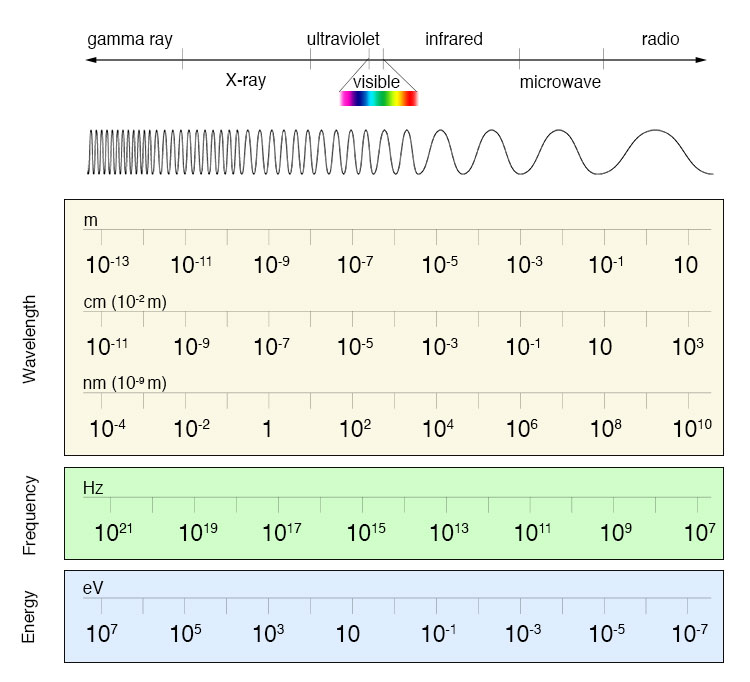
The electromagnetic spectrum can be expressed in terms of energy, wavelength or frequency. Each way of thinking about the EM spectrum is related to the others in a precise mathematical way. Scientists represent wavelength and frequency by the Greek letters lambda (λ) and nu (ν). Using those symbols, the relationships between energy, wavelength and frequency can be written as:
wavelength equals the speed of light divided by the frequency
or
λ = c / ν
and
energy equals Planck's constant times the frequency
or
E = h × ν
Where:
  • λ is the wavelength
  • ν is the frequency
  • E is the energy
  • c is the speed of light, c = 299,792,458 m/s (186,212 miles/second)
  • h is Planck's constant, h = 6.626 x 10⁻²⁷ erg-seconds
Both the speed of light and Planck's constant are constant – they never change in value.
Illustration showing conversions between wavelength, frequency and energy
Conversion between wavelength, frequency and energy for the electromagnetic spectrum. (Click image for a larger version.)

Astronomy Across the Electromagnetic Spectrum

While all light across the electromagnetic spectrum is fundamentally the same thing, the way that astronomersobserve light depends on the portion of the spectrum they wish to study.
For example, different detectors are senstive to different wavelenths of light. In addition, not all light can get through the Earth's atmosphere, so for some wavelengths we have to use telescopes aboard satellites. Even the way we collect the light can change depending on the wavelength. Astronomers must have a number of different telescopes and detectors to study the light from celestial objects across the electromagnetic spectrum.
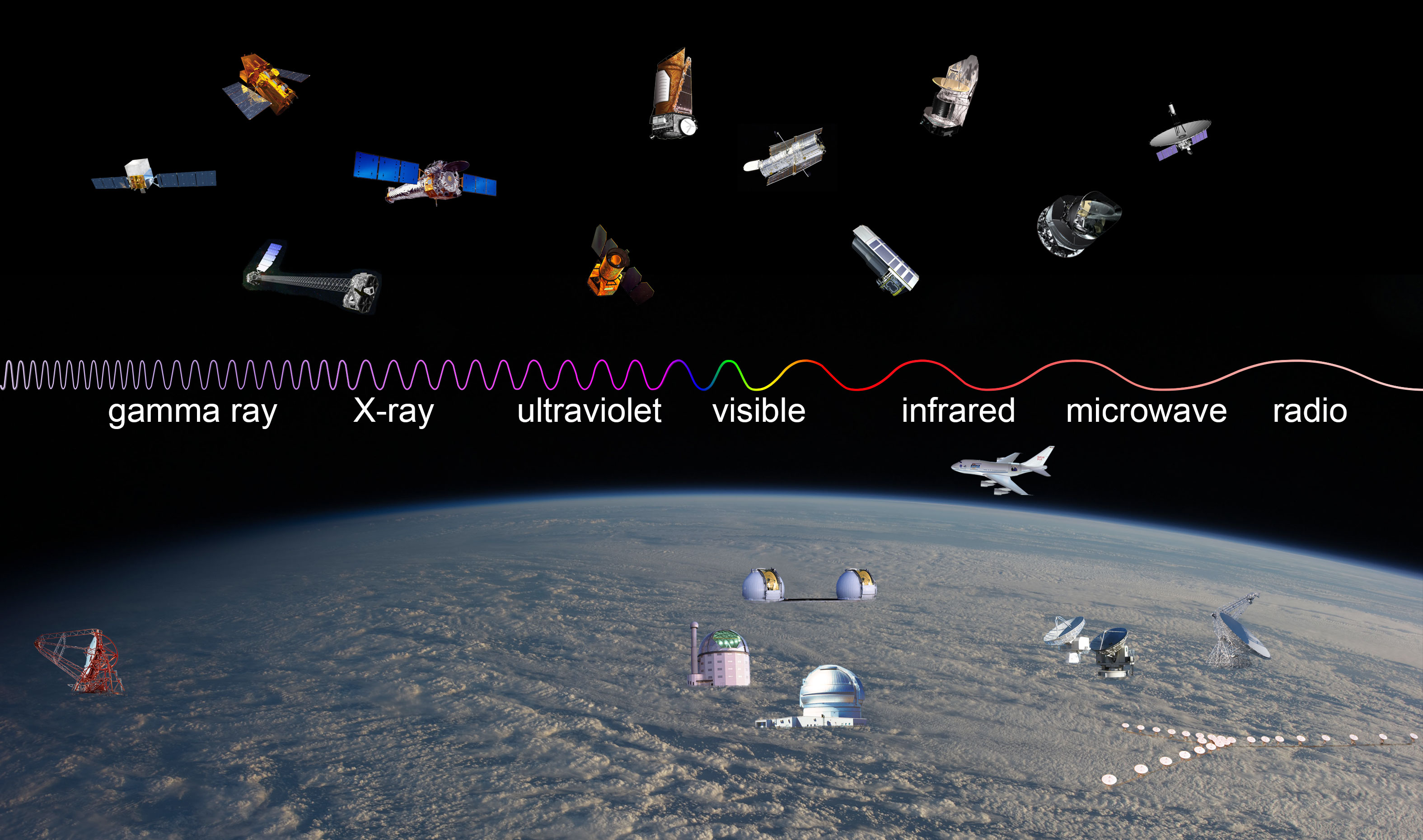
illustration showing different telescopes that observe each band 
 of the electromagnetic spectrum
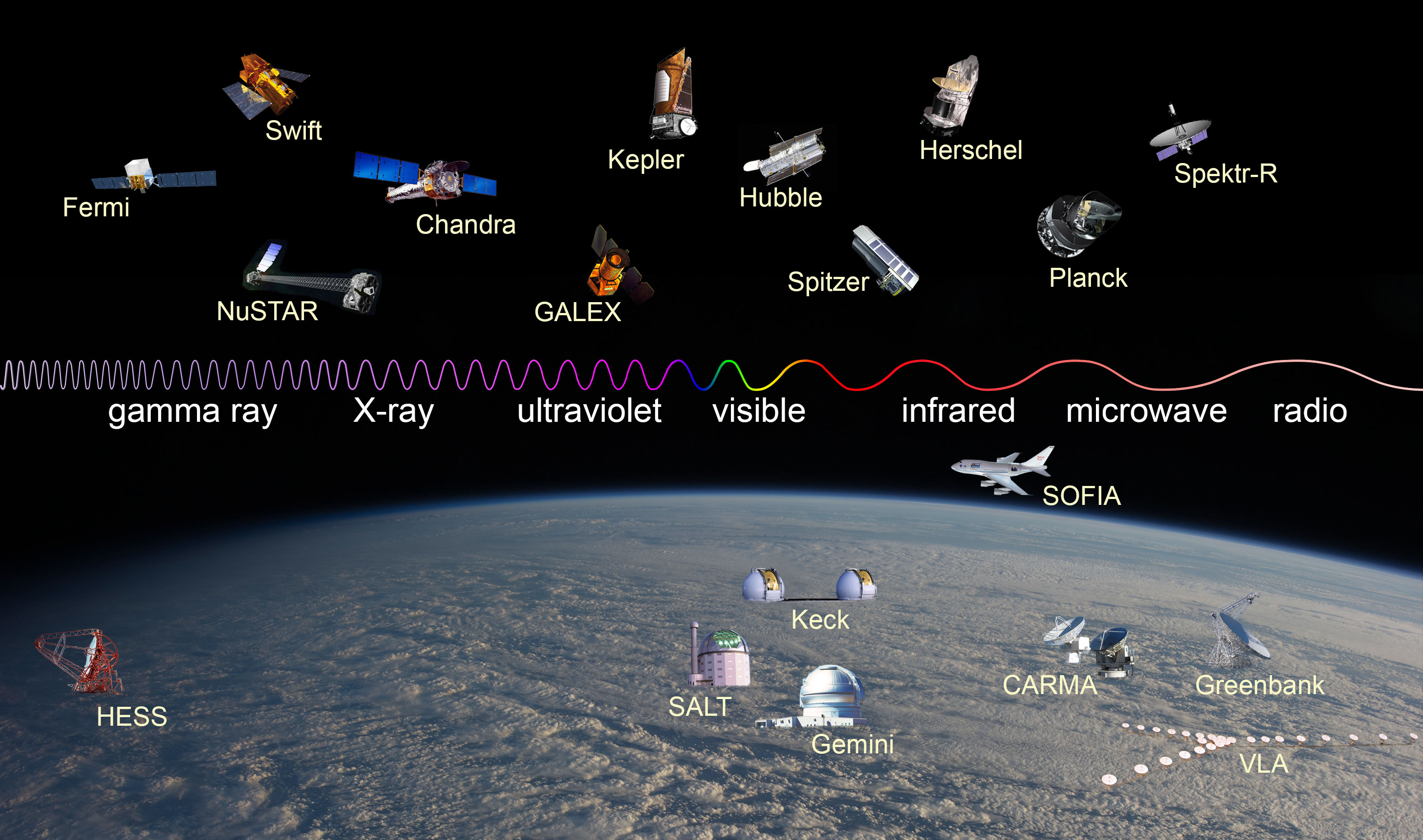
A sample of telescopes (operating as of February 2013) operating at wavelengths across the electromagnetic spectrum. Several of these observatories observe more than one band of the EM spectrum, and those are placed within the band of their primary instrument(s).
The represented observatories are: HESS, Fermi and Swift for gamma-ray, NuSTAR and Chandra for X-ray, GALEX for ultraviolet, Kepler, Hubble, Keck (I and II), SALT, and Gemini (South) for visible, Spitzer, Herschel, and Sofia for infrared, Planck and CARMA for microwave, Spektr-R, Greenbank, and VLA for radio. Click here to see this image with the observatories labeled.