Shyam's Slide Share Presentations

VIRTUAL LIBRARY "KNOWLEDGE - KORRIDOR"

This article/post is from a third party website. The views expressed are that of the author. We at Capacity Building & Development may not necessarily subscribe to it completely. The relevance & applicability of the content is limited to certain geographic zones.It is not universal.

TO VIEW MORE CONTENT ON THIS SUBJECT AND OTHER TOPICS, Please visit KNOWLEDGE-KORRIDOR our Virtual Library

Showing posts with label Healthcare. Show all posts

Wednesday, December 5, 2018

Effects of varying amounts of carbohydrate on metabolism after weight loss 12-05


Image credit :Shyam's Imagination Library 


Losing weight is hard work, but many people who have lost weight may agree that keeping the weight off 

It can be an even greater challenge. A lack of self-control or a few too many dietary indulgences are often cited as reasons for regaining weight. But a new study in the November issue of BMJ questions this conventional view, finding that the type of calories you consume may influence how likely you are to keep that weight off for the long term. [1]

The human body is designed to protect itself when it sheds weight, whether voluntarily or involuntarily, by causing an increased urge to eat and a slowdown in metabolism while more efficiently storing fat. Although it may be exciting to see pounds on the scale drop, the ability to keep losing weight or even maintain any weight loss becomes harder, because cravings to eat rise while the body more readily stores those calories as fat.

The purpose of the BMJ study was to see if different levels of carbohydrate in the diet could prevent these metabolic changes from occurring, so that any weight lost might stay off. The focus on carbohydrates was based on the “carbohydrate-insulin model” of obesity, which states that high insulin levels that result from eating a high glycemic load diet (i.e., highly processed carbohydrates like refined breads, crackers, cookies, and sugars) causes energy from the food to be stored more easily as fat, and may increase hunger and food cravings, lower energy expenditure, and promote weight gain.

The study


Participants were first placed on a weight-reducing diet to lose about 12% of their starting weight (weight loss averaged 25 pounds) to kickstart metabolic changes. The next phase randomly assigned the 164 p
  1. high (60%) carbohydrate and low (20%) fat diet
  2. moderate (40%) carbohydrate and (40%) fat diet
  3. low (20%) carbohydrate and high (60%) fat diet
The protein amount was the same in all groups at 20%. Total calories were adjusted up or down to prevent any weight changes in each participant. All meals were provided to the participants during the weight loss phase and throughout the 20-week test phase. The types of foods in each diet group were designed to be as similar as possible, but varying in amounts: the high carbohydrate group ate more whole grains, fruits, legumes, and low fat dairy products. In contrast, the low carbohydrate group ate more fat but eliminated all grains and some fruits and legumes.
Participants followed the diets for 20 weeks and total energy expenditure was measured. During the 20 weeks, the participants in all groups maintained their weight and there was minimal difference in secondary measures including physical activity and resting energy expenditure (factors that could independently increase total energy expenditure).

The findings

  • The low carbohydrate group showed an increased energy expenditure with a range of 209-278 calories/day compared with the high carbohydrate group. The moderate carbohydrate group showed a smaller increase in expenditure of about 100 calories compared with the high carbohydrate group. This trend was consistent throughout the 20-week period.
  • The increased metabolic effect with the low carbohydrate diet was most significant in people who had high insulin secretion at the start of the study, with an increased energy expenditure of a range of 308-478 calories/day. (People with high insulin secretion tend to be shaped more like “apples” than “pears,” as excess body fat is stored predominantly around the mid-section.) This finding supports recent research to suggest that differences in biology may affect how people respond to weight loss diets over the long term.
A hormone that works to increase appetite, ghrelin, decreased significantly on the low carbohydrate diet, which could help with weight loss maintenance. Another appetite-regulating hormone, leptin, also decreased. Leptin regulates energy balance and works to keep body weight stable. It typically counteracts ghrelin by sending signals to the brain to suppress appetite when the body has enough food. Previously, high leptin levels were thought to lower one’s appetite and cause the body to begin using stored fat for energy. However, some forms of obesity/overweight may lead to “leptin resistance” when the body has high levels of leptin. In this scenario, the brain does not receive an alert that leptin levels are already high, so it continues to send strong hunger signals while conserving body fat stores. In other words, high leptin levels may promote leptin resistance. Its significance in the BMJ study was that the lower carbohydrate diet appeared to improve leptin sensitivity by reducing high levels of leptin.
“This study raises the possibility that a focus on restricting carbohydrates, rather than calories, may work better for long-term weight control,” said Dr. David Ludwig, professor in the Department of Nutrition at the Harvard T.H. Chan School of Public Health, who led the study with Dr. Cara Ebbeling from Boston Children’s Hospital.

Dr. Walter Willett, professor of epidemiology and nutrition at the Harvard Chan School, who was not involved in the study, also noted that  “these findings from a carefully conducted investigation can help explain why low fat/high carbohydrate diets are not successful for most people and have failed to maintain weight loss in formal randomized trials that have lasted for one year or longer.”

Related

In a review featured in Science magazine the same week as the BMJ study, Dr. Ludwig discussed the controversy over specific fat-to-carbohydrate ratios in maintaining a healthy weight and lowering disease risk. [2] He, Dr. Willett, and other experts on the subject agreed that by focusing mainly on diet quality—replacing saturated or trans fats with unsaturated fats and replacing refined carbohydrates with whole grains and nonstarchy vegetables—most people can maintain good health within a broad range of fat-to-carbohydrate ratios. Read more at  Dietary fat is good? Dietary fat is bad? Coming to consensus.


View at the original source

Sunday, July 5, 2015

Single-cell breakthroughs let scientists see exactly what we’re all made of 07-05

Single-cell breakthroughs let scientists see exactly what we’re all made of

In Israel for Broad Institute conference, Eric Lander, pioneer of Human Genome Project, marvels at speed with which ‘new genomics’ opens ways to fight disease


Two years ago, when mathematician and biologist Eric Lander was in Israel for an innovative gathering of researchers and students, he took a break from his conference to describe to The Times of Israel how scientists had completed the sequencing of the human genome — a person’s “parts list” — and were now working on the “wiring diagram,” setting out how those parts work together.


Back in Israel recently for the third of his Broad Institute’s annual conferences, Lander enthused over the “amazing” pace at which science has moved on since that last visit, most especially in the study of single cells — what he called “the new genomics.”


One of the founding fathers of the Human Genome Project, Lander has dedicated his work to understanding what makes us tick, the better to keep us ticking. To underline the significance of this work for all of us, I headlined my 2013 interview with him, “This man’s work will change your life.” What’s unfolded in the last two years, he said, is a growing ability to identify what we humans are made of at the most fundamental level — the level of a single cell — with extraordinary potential benefits for understanding, observing and treating the diseases that afflict us.

Lander, 58, is the founding director of the Broad Institute of Harvard and MIT, which is devoted to utilizing human genome research in medicine. He was back in Israel for the “Third Annual Broad-Israel Science Foundation (ISF) Cell Circuits Symposium” — which brought together experts and students from the Broad Institute, from Harvard, and from Israel’s universities, on the cutting edge of human genome research and its applications for medicine.

Capitalizing on an Israeli scientific community that is very strong when it comes to combining biology and info-technology skills, the Broad-Israel partnership encourages Israeli and American trailblazing in an increasing number of joint projects, all designed to speed our progress toward thwarting cancers, Alzheimer’s, diabetes and other diseases.

Explaining the rapid advances in single-cell research, Lander said that as recently as two years ago, scientists had only what you might consider “a pixelated, low-resolution image” of our cell structure. They really didn’t know how many different types of cells there are in the body, and they couldn’t identify the differences between them.

“In the past we had a kind of blended big picture, a ‘smoothie,'” said Lander, finding another metaphor to enlighten this non-expert. “Now, because of new laboratory techniques and maths and advances in DNA sequencing,” he went on, “we have the ability to study single cells. Folks spent 40 years working to identify the cells of the retina, the back of an eye,” he said by way of an example. “Now you can do that in an afternoon.”

And why should we care? Because, Lander positively sparkled, “the ability to do single-cell analysis, to get the identities and states of each of the cells, is the final revolution in this field. It’s the equivalent of an amazing new microscope” — a microscope that offers remarkable potential for improving our health.

Human cancer cells with nuclei (specifically the DNA) stained blue. The central and rightmost cell are in interphase, so the entire nuclei are labeled. The cell on the left is going through mitosis and its DNA has condensed.  (TenOfAllTrades/Wikipedia)
Human cancer cells with nuclei (specifically the DNA) stained blue. The central and rightmost cell are in interphase, so the entire nuclei are labeled. The cell on the left is going through mitosis and its DNA has condensed. (TenOfAllTrades/Wikipedia)

For instance? In the old days — that is, until a couple of years ago — scientists struggled to understand what constituted a tumor. What common genetic features do tumors have? How might tumors be tackled most effectively? “Now we can see the commonality, the types of cells, the proportions, the logic,” he said. “This has major implications for our health.

“You want to kill a tumor? Well, maybe our treatments work on one type of cell. We were blind to that. Now we can test a treatment on the few different types of cells.”

The new microscope, in other words, enables an unprecedentedly precise understanding of disease. “It tells us what we need to solve.”

‘The ability to do single cell analysis, to get the identities and states of each of the cells, is the final revolution in this field. It’s the equivalent of an amazing new microscope’

“Imagine medicine before gross anatomy,” Lander suggested, as he sought to put the dramatic recent progress into historical perspective. “Then comes anatomy, and you can describe the organs of the body. You can see something problematic, say, in the lung, or in the heart. Well, this is the ultimate anatomy. It will penetrate every type of medicine. Not bad for two years. This just didn’t exist last time we spoke.”

Another area of rapid progress cited by Lander is the ability to “precisely edit” the genome of human cells, which has massive potential to help treat certain diseases. Just two years ago, Feng Zhang, a researcher at the Broad, invented this power gene-editing technology by harnessing by harnessing — called CRISPR-Cas9 — that can cut genomes in any place and thus enable editing.

Already an Israeli researcher at Broad has published a paper “editing” each of the 20,000 genes to find those that are essential to particular types of cancer cells – in effect, identifying the Achilles Heels of these cancers.

These advances also might open up possibilities of altering the human gene pool, of working to create less-diseased humans, even super-humans. “There’s talk of editing the DNA of embryos to alter our gene pool,” he acknowledged. “It’s being discussed.”

Then he added dryly, “I’m not sure it’s a good idea. Eugenics hasn’t worked out too well for society. Moreover, changing DNA for one purpose can have unexpected bad consequences.”

Where the advances are clearly positive is in the capacity — as genetic mapping becomes more affordable and more sophisticated — to identify the genes that predispose to Alzheimer’s, early onset cancer and many other diseases. (A personal genome map now costs about $3,000, he said.)

In some cases, genetic information can be important to parents. “Today, doctors can check two folks getting married for some mutations that would cause a disease if it was inherited by their children. In the future you would do checks for more.”

The partnership between Broad and Israel, Lander stressed, works particularly well because of Israel’s strong information technology and bio-science communities. “Israel is such an intersection of those skill sets,” he said.

And Israel’s ever-strained public health system, he added, actually has very good electronic medical records — “a 20-year history,” he said — which makes it well-placed to utilize new advances as they become available. “In the next decade we’ll collect a lot of information, and we’ll figure out the best uses. We’ll assess the risks of disease, the possibility to intervene.”


For all of that, you need groundbreaking scientists and good data. Like the United States, said Lander, Israel has both.

View at the original source

Sunday, February 15, 2015

Big data redefines the traditional scientific methods used in medicine 02-15


Big data redefines the traditional scientific methods used in medicine

Healthcare professionals are applying big data and analytics to clinical challenges. This is just the beginning of a redefinition in the traditional scientific methods used in medicine. 
Watson3.jpg
IBM Watson
 Image: Bob Goldberg/courtesy of IBM
Stanford University will host a big data in biomedicine conference May 20-22, 2015 for medical researchers hailing from colleges and universities, hospitals, government, and industry. The goals are to encourage collaboration, address challenges, and identify actionable steps for harnessing big data in healthcare.
There are plenty of incentives. Whether through mega-scientific computing projects that process petabytes of data or through more informal ways of looking at data and analyzing it in new ways to reach outcomes that were previously unattainable, medicine is marching forward in applying big data and analytics to clinical challenges.
For instance, at Lucile Packard Children's Hospital Stanford in 2011, a young girl from Reno, Nevada, was flown by helicopter to the hospital, where she was admitted to the intensive care unit. The girl had lupus, which attacks the body's healthy tissues and can cause permanent kidney damage. An interdisciplinary team of doctors had to weigh the risks of using a coagulant that could thin blood and help prevent clots against the counter risks of complicating surgery, causing a stroke or creating a bleed into an organ. The team needed data.
A young physician named Jennifer Frankovich resorted to using a database of children with lupus that she had been helping to build. Part of the database work had entailed digitalizing charts and making data searchable with keywords. Through database searches, Dr. Frankovich was able to look at every pediatric lupus patient who had come through the hospital to see how many of them developed blood clots, and what the risk factors were. From there, she could calculate whether the risks of a blood clot in her current patient justified the risks of prescribing an anti-coagulant. The calculations indicated that the risk was worth taking, and the patient was given an anti-coagulant. The patient immediately showed signs of improvement.
Atul Butte, an entrepreneur and associate professor of pediatrics at the Stanford School of Medicine, compared Dr. Frankovich's work to a "seismic shift" happening in medicine. "The idea here is, the scientific method itself is growing obsolete," Butte said.
This scientific method as it has existed for decades and continues to exist in medicine today consists of a team of eminently qualified specialists from a variety of medical fields consulting with each other and sharing their collective experiences of treatment options and outcomes for the patient. In cases where unusual circumstances or risks present themselves, medical literature and empirical evidence that the scientific method demands are often missing. This happened in the Stanford lupus case, and this is where Dr. Frankovich was able to fill in the blanks with insights from data.
Is this the end of the story? Not quite.
Administrators at that hospital still feel it is safer to trust the wisdom of a team of doctors in urgent cases than to search medical records for data about what's worked in the past. In a January 2015 interview with NPR, Dr. Frankovich agreed, noting that "analyzing data is complicated and requires specific expertise. What if the search engine has bugs, or the records are transcribed incorrectly? There's just too much room for error....It's going to take a system to interpret the data, and that's what we don't have yet."
This comes full circle to the upcoming big data conference at Stanford this spring. The conference announcement states, "While other industries have been far more successful at harnessing the value from large-scale integration and analysis of big data, health care is just getting its feet wet. Yes, providers and payers are increasingly investing in their analytical capabilities to help them make better sense of the changing health care environment, but it is still early days."
True enough, but in healthcare settings like the Cleveland Clinic, doctors and medical practitioners are already making use of big data and analytics that diagnose conditions and prescribe treatments. What the analytics say is simply entered into the discussions that interdisciplinary teams of doctors have when they review patients. And while data quality and integration issues in healthcare continue to persist, there is an unmistakable beginning of a redefinition in the traditional scientific methods used in medicine.

Tuesday, February 10, 2015

Newly Discovered Networks among Different Diseases Reveal Hidden Connections 02-11

Newly Discovered Networks among Different Diseases Reveal Hidden Connections


Enormous databases of medical records have begun to reveal connections among diseases that could provide insights into the biological missteps that make us sick.


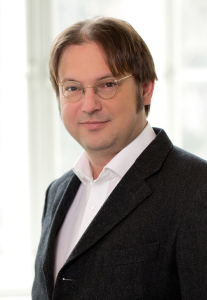
Stefan Thurner is a physicist, not a biologist. But not long ago, the Austrian national health insurance clearinghouse asked Thurner and his colleagues at the Medical University of Vienna to examine some data for them. The data, it turned out, were the anonymized medical claims records — every diagnosis made, every treatment given — of most of the nation, which numbers some 8 million people. The question was whether the same standard of care could continue if, as had recently happened in Greece, a third of the funding evaporated. But Thurner thought there were other, deeper questions that the data could answer as well.
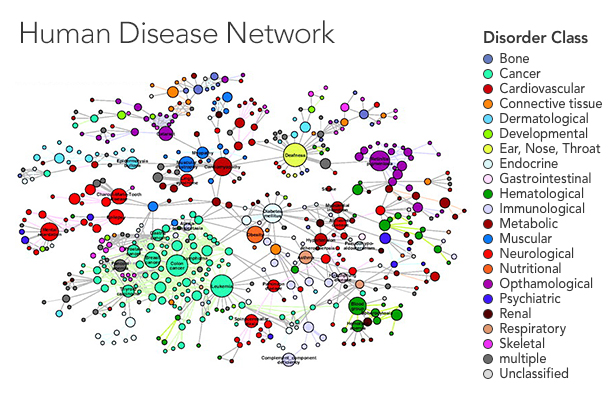
In a recent paper in the New Journal of Physics, Thurner and his colleagues Peter Klimek and Anna Chmiel started by looking at the prevalence of 1,055 diseases in the overall population. They ran statistical analyses to uncover the risk of having two diseases together, identifying pairs of diseases for which the percentage of people who had both was higher than would be expected if the diseases were uncorrelated — in other words, a patient who had one disease was more likely than the average person to have the other. They applied statistical corrections to reduce the risk of drawing false connections between very rare and very common diseases, as any errors in diagnosis will get magnified in such an analysis. Finally, the team displayed their results as a network in which the diseases are nodes that connect to one another when they tend to occur together.
The style of analysis has uncovered some unexpected links. In another paper, published on the scientific preprint site arxiv.org, Thurner’s team confirmed a controversial connection between diabetes and Parkinson’s disease, as well as unique patterns in the timing of when diabetics develop high blood pressure. The paper in the New Journal of Physics generated additional connections that they hope to investigate further.
Eventually, Thurner and a growing number of other researchers hope to use these disease networks to generate hypotheses about how diseases operate at the molecular level. “Is this disease caused by a gene?” Thurner said. “Is it caused by a defect in the metabolic network? Is it due to environmental things that affect certain genes? Things like this. This is the aim.”
Stefan Thurner analyzed the anonymized medical records of all of Austria.
Medical University of Vienna/Matern
Stefan Thurner analyzed the anonymized medical records of all of Austria.
The work is being driven by the realization that diseases, as defined in medicine, sound like tidy, distinct entities, but are messier in reality. Diseases tend to be defined by their symptoms. But the molecular roots of a disease may have biological effects that go far beyond our current understanding. Certain diseases tend to follow others or have high rates of comorbidity, and though it isn’t clear why, it may be because they arise from related biological flaws.
“The idea is, connections at the cellular level get amplified at the population level, and they emerge as comorbidity,” said Albert-László Barabási, a physicist at Northeastern University who has published several landmark papers in this area, including a 2009 article in PlOS Computational Biology that helped inspire Thurner, as well as a 2011 review of the field in Nature Reviews Genetics. Using a disease network, a researcher might suggest that biologists look for new disease genes shared between diseases one and two, for instance, where there seems to be a strong connection.
Biologists typically look for genetic connections by using genome-wide association studies, which statistically associate genetic markers with disease. But at Harvard Medical School, another research team is attempting to find the same connections by mapping networks of a very different kind: the molecular networks at work in a cell.
Networks of Life
The inside of a cell seethes with activity, as tiny molecules, enormous proteins and strands of DNA wash around each other going about their business. Each actor’s business is some set of other actors — a protein, for instance, might snip pieces off of other proteins, ferry molecules around, or jump-start the manufacturing of DNA. It takes its cues from other actors, which can make it work faster or more slowly or send it off to distant regions where it’s needed.
The functioning of the cell can take on a very different character if even a single member of this molecular social network starts to behave oddly. Before long, the effects ripple outward from the initial flaw, causing problems — disease — on the level of the organism. A disease is in some sense just an expression of the underlying dynamics of this social structure. Thurner hopes his disease networks can eventually help uncover some of these flaws.
And it’s here at the sub-microscopic end of things that Joseph Loscalzo, a professor at Harvard Medical School and a long-time collaborator of Barabási’s, is mapping his own network. He and his team start by gleaning data from numerous databases on which proteins interact with each other and how. Then, using a computer model, they sketch out the social network within an average cell, connecting individual genes and proteins to one another if they happen to interact. Loscalzo’s team has built a diagram with 13,460 protein nodes and 141,296 links. (These interactions probably account for only about 20 to 25 percent of the total, Loscalzo says, but it’s a start.) Then they isolate just the nodes that have been statistically linked to a given disease. They call this set of nodes the disease module.
A human disease network maps out connections between diseases — if patients who have one disease tend to also have another, the two disease nodes are connected.
Olena Shmahalo/Quanta Magazine; source: Albert-László Barabási
A human disease network maps out connections between diseases — if patients who have one disease tend to also have another, the two disease nodes are connected.
One disease module they’ve studied is for pulmonary hypertension — high blood pressure in the lungs, which can cause heart failure. They looked at all the molecular pathways that genome-wide association studies suggested were involved. They then studied which pathways grow more active in animal models and in pulmonary hypertension patients under stress. Their disease module revealed that two proteins previously linked to some forms of the disease were part of the same molecular pathway and that they work together to cause errors in cell proliferation, which may be linked to the symptoms of the disease. The researchers published their findings in the journal Pulmonary Circulation.
Another module looks at Type 2 diabetes. Researchers have linked diabetes to about 200 spots on the genome through genome-wide association studies. “The first 18 or so of those are highly significant, but the last 182 or so are just at the margin,” Loscalzo said. But in the disease module, it was clear that some of those 182 genes were highly connected hubs in the social network, a state of affairs that a genome-wide association study alone is not equipped to reveal. “We’ve explored three of those [genes] now, and they highlight pathways that had been peripherally believed to be associated with diabetes but never demonstrated in any careful way,” he said.
Combining Loscalzo’s molecular networks with Thurner and Barabási’s disease networks would help to create a bridge between correlation and mechanism. If comorbid diseases share overlapping molecular networks, researchers could use the networks to understand the biochemical mechanisms behind them. These two kinds of networks, very different in how they are built, are united only by the idea that data can reveal connections that otherwise would pass unnoticed. But together these networks have the potential to open new doors in the study of disease.
“Once you draw a network, you are drawing hypotheses on a piece of paper,” Thurner said. “You are saying, ‘Wow, look, I didn’t know these two things were related. Why could they be? Or is it just that our statistical threshold did not kick it out?’” In network analysis, you first validate your analysis by checking that it recreates connections that people have already identified in whatever system you are studying. After that, Thurner said, “the ones that did not exist before, those are new hypotheses. Then the work really starts.”
It is worth remembering that both techniques are still relatively new. Loscalzo can reel off ways that his results could be flawed — the sprawling incompleteness of the data on protein-protein interactions is a major concern, but so are the methods used to gather the data, which are the best currently possible but far from perfect. And Thurner and his students are still gathering collaborators in biology who can test their hypotheses. After they published their first results from the database a couple of years ago, Thurner said wryly, “we thought we would have a hundred people sitting in our office,” looking to collaborate. So far, the response has been more of a trickle.
“It’s not uncontroversial,” said Andrey Rzhetsky, a professor of genetics at the University of Chicago with a background in mathematical biology who has published on comorbidity networks. “Some people feel very strongly about big data sets — almost to the point of fanatic refusal to accept results from large-scale analysis.” The argument, he explains, is that there are unknown biases in large data sets. In the case of databases like Thurner’s, these biases stem from the different ways doctors enter information into medical records, the way ethnicity is accounted for, and so on. Rzhetsky acknowledges the danger of biases but believes they do not eliminate the usefulness of the data, provided researchers are careful with their interpretations. “I do think it’s the direction for the future, but it’s far from a solved problem,” he said. He was intrigued by the article in the New Journal of Physics. “The model is extremely simple, but the direction is great,” he wrote in an email.
Loscalzo is aware of his colleagues’ scrutiny. “When I give talks about network medicine,” he said, “I’ve gotten three kinds of responses. At one end of the spectrum are generally young people … who say this is a great idea, I hadn’t thought about this before. … At the other end of the spectrum I have people my age or older who say: ‘What are you talking about? I’m a member of the National Academy and that’s all based on reductionist biology, I’m not going to change my strategy.’ Then in the middle you’ve got this broad swath of people who have a healthy skepticism and who want there to be some sort of proof that these notions can give us new insights. And that’s what we’ve been working on.”

Friday, July 19, 2013

Five Imperatives for Improving Health Care 07-20

Five Imperatives for Improving Health Care


Leaders from Harvard's medical and business schools are exploring ways to some 125 health care experts including executives, policy makers, and academics. In association with the conference, the Forum launched an HBS and HMS Survey of Executive Sentiment in Health Care.
Innovation in health care treatment seems to far outpace innovation in health care business management. Just ask President Obama—two weeks ago he delayed enactment of a key provision of the new health care law for fear its requirements would swamp small-business owners.
So results of a recent conference and survey from Harvard's business and medical schools may prove particularly timely. Delivered by the Forum on Healthcare Innovation, which was formed last year with encouragement from the respective deans of the two institutions, the report makes five recommendations for how to improve quality, reduce costs, and, consequently, increase value in the American health care industry.
To kick off its work, the Forum in November 2012 hosted its inaugural conference, entitled "Healing Ourselves: Addressing Healthcare Innovation Challenge," which brought together some 125 health care experts including executives, policy makers, and academics. In association with the conference, the Forum launched an HBS and HMS Survey of Executive Sentiment in Health Care.
“THERE’S A LOT OF ACTIVITY THAT GOES ON IN HEALTH CARE THAT DOESN'T NECESSARILY CONTRIBUTE TO OVERALL VALUE”

"We were not asking those executives to provide objective information about their own organizations or specific numbers; rather, we simply wanted to capture where the industry feels most optimistic and pessimistic about delivering value," explains Robert S. Huckman, Albert J. Weatherhead III Professor of Business Administration at HBS and a member of the Forum's faculty steering committee.
Other committee members include William W. Chin, Executive Dean for Research at HMS; Richard G. Hamermesh, MBA Class of 1961 Professor of Management Practice at HBS; Barbara J. McNeil, Ridley Watts Professor of Health Care Policy at HMS; and Joseph P. Newhouse, John D. MacArthur Professor of Health Policy and Management at Harvard University.
The key findings from the conference and survey are detailed in the Forum's recent report, 5 Imperatives: Addressing Healthcare's Innovation Challenge, and discussed below:
Making value the central objective: Regarding the current quality of US health care, survey respondents expressed varied sentiment: 14 percent were "strongly positive," 20 percent "strongly negative," and the rest somewhere in between. But adding cost to the mix of issues changed their sentiments considerably.
Asked about the prospects for cost and quality of health care in the US, 22 percent felt strongly negative and only 1 percent felt strongly positive. "It was pretty stark," Huckman says. "The concern is that the costs have become so great that anything we do to improve quality becomes almost irrelevant if we can't finance the system to deliver it."
Hence the imperative to focus on value, the quality of outcome achieved per unit of cost spent by the system.
Researchers want to improve the business management of health care"There's a lot of activity that goes on in health care that doesn't necessarily contribute to overall value," Huckman says. "Think about a company that runs very profitable hospitals. Are they profitable because they've figured out how to offer high quality care at low cost? Or are they profitable because they've figured out that specific types of procedures tend to be reimbursed very well by insurance companies, and they've set themselves up to do a lot of those particular procedures?
"Those are two different scenarios, and we'd like to see more of the former than the latter."
Promoting novel approaches to process improvement: Although health care innovation efforts traditionally have focused on new products such as drugs and devices, survey respondents ranked process improvements in care delivery as the most promising opportunity for improving the cost and quality of health care.
"A lot of hospitals have been running the same way for the last 30 years. We want providers to look at their processes for activities, such as running an operating room, discharging patients, or conducting physician rounds, and figure out cost-effective ways to improve upon them," Huckman says.
Making consumerism really work: In contrast to process improvement, "consumer incentives to encourage healthy behavior" ranked last among 11 possible innovations in terms of its ability to increase value in health care, according to survey respondents. The reason: Incentives aren't effective unless paired with good information. And the oft-fragmented nature of the American health care system makes it hard to turn patients into active consumers.
“A LOT OF HOSPITALS HAVE BEEN RUNNING THE SAME WAY FOR THE LAST 30 YEARS”
At the conference, attendees agreed that a few things need to happen to help patients to make informed choices. All agreed that it's critical to encourage consumers to pursue healthier lifestyles. But just as importantly, patients also need better access to data on both the cost and potential outcome of specific medical procedures. Moreover, they need a mechanism for understanding that data.
"Let's face it," Huckman says. "We've long had our clinical decisions in the hands of physicians who have had, in most cases, at least seven years of post-baccalaureate medical training. These are often technical decisions that can be very nuanced. So how do we help consumers have a role in the decision-making when the information is so complex? The key is not just to get the information to the consumers but to help them process it."
Decentralizing approaches to problem solving: Conference attendees and survey respondents generally applauded the fact that health care delivery is becoming more decentralized—with care delivery spreading beyond traditional facilities and into new models such as the MinuteClinic, a for-profit provider that operates some 640 clinics inside CVS pharmacies.
"So much of health care has grown up around centralized organizations," Huckman says. "Now what we're seeing in all sectors of health care is some movement away from these centers and toward the periphery. So instead of people going to the downtown medical center they might go to a retail clinic. They might increasingly have their care monitored from home. In its most extreme form, patients may actually become their own providers with respect to many issues."
Integrating new approaches into established organizations: Still, survey respondents stressed the importance of established firms and hospitals in fostering innovation—especially in the areas of disease management, pharmaceuticals, electronic medical records, and basic research.
"We can't just wait for decentralized approaches to come and save us," Huckman says. "At some point we need to go to the large medical centers, group practices, and pharmaceutical firms to figure out how to integrate these new ideas into existing organizations."

EFFORTS CONTINUE

Improving health care delivery is also the main agenda of the HBS Healthcare Initiative, a multidisciplinary research effort. It is one of several big societal issues specifically studied at the School, where researchers are exploring ways that business management expertise can be harnessed to improve everything from delivering affordable essential services to the poor to making the US more competitive in world markets.
In the future, the Forum on Healthcare Innovation will turn to the five imperatives as a guide for evaluating new ideas and reevaluating existing processes. In the meantime, the group rests assured that the cure for health care does not hinge on a single magic bullet.
"At the end of the day, the big idea is that there's no big idea," Huckman says. "It's about a lot of little things—many of which we already know—that we need to execute consistently."